Anthropic finally shipped the bug-finder it had kept behind a trust gate for two months, OpenAI and SpaceX joined it in filing for the public markets, and the most powerful AI in the world went on sale the same week the proofs underneath it came up short. A clean benchmark put the best agentic coder at 29% on real work, the supply-chain worm crossed into Python while hunting the keys the stack runs on, and OWASP called the agent runtime's core flaw permanent. The frontier cashed in its promise; the ground it stood on kept giving way.
BEATS 06
DISPATCHES 13
CHAIN MYTHOS × 03
PUBLISHED 2026-06-13
I.
THE MODEL IT REFUSED TO SHIP
After eleven issues behind a trust gate, the bug-finder went on sale.
112FIELD REPORTMYTHOS · CHAIN
Anthropic Shipped The Model It Called Too Dangerous.
It Arrived Behind A Price And A Reroute.
Claude Fable 5 puts a Mythos-class bug-finder in public hands; the unfenced version stays inside a government consortium.
SAN FRANCISCO, June 9. Anthropic released Claude Fable 5, the first Mythos-class model the public can call, at $10 per million input tokens and $50 per million output tokens, twice Opus 4.8. This is the same lineage Anthropic held off shipping in April, after Mythos Preview found thousands of zero-day flaws across every major operating system and browser. The bug-finder THE SIGNAL tracked for eleven issues now answers to anyone with an API key.
The fence is a classifier, not a smaller model. When a request reads as cybersecurity, biology, or distillation, the query routes to Opus 4.8 rather than Fable 5, and the user is told it happened. Anthropic reports that more than 95% of sessions never trip the fallback. The unfenced model exists too: Claude Mythos 5, the same weights with the safeguards lifted, sits inside Project Glasswing, a consortium of infrastructure providers and vetted researchers. Two SKUs, one capability, split by who you are.
Anthropic shipped the public Fable on June 9 and, the next day, published its Advanced AI Framework asking governments to mandate third-party testing and to block deployments deemed unsafe, itself included. The sequence is the argument: the company that says frontier models should clear a regulator's bar first chose to clear its own bar with a price tag and a reroute. A capability does not become safe because a classifier sits in front of it; it becomes purchasable. The thing called too dangerous to ship now ships, and the only thing standing between the public version and the Glasswing version is a credential.
SAN FRANCISCO, 8 June. OpenAI submitted a confidential draft S-1 to the SEC, then did the unusual thing of saying so the same day rather than waiting to be outed. "We expect it to leak so we're just announcing it," the lab wrote. The filing lands one week after Anthropic disclosed its own move toward a listing on 1 June, with Goldman Sachs and Morgan Stanley lined up to lead the deal. The lab last carried a private mark of $852 billion from a March round.
A confidential S-1 is a registration statement filed with the regulator but withheld from the public, a path that lets a company start the IPO clock without exposing financials to competitors until roughly two weeks before a roadshow. OpenAI declined to commit to a date: "it may be a while because there are things we want to do that are likely easier as a private company." Market estimates have floated a listing valuation as high as $1 trillion, but that figure lives in private-market chatter, not in the paperwork, and the disclosed number stays sealed by design.
Three frontier labs filing inside a fortnight is not three companies independently deciding the window is open. It is a queue. Anthropic went first, OpenAI announced second, and the capital that funds the next training run now routes through the same two banks on Wall Street that price every other megacap. The compute thesis was always that whoever raises most, wins; the S-1 is where that thesis stops being a pitch and starts being audited.
NEW YORK, 12 June. SpaceX priced its IPO at $135 a share on 11 June and opened trading the next morning on the Nasdaq under ticker SPCX, raising a record $75 billion at a $1.75 trillion target valuation. Elon Musk keeps 82.4 percent of voting power through a dual-class structure, so public shareholders buy the cash flow and almost none of the control. The float carries the xAI division merged into SpaceX in February, the same xAI that lost $6.4 billion in 2025 on $3.2 billion of revenue.
The S-1 splits the company cleanly into a profit engine and a burn pit. Starlink booked $11.4 billion in 2025 revenue and $4.4 billion of operating income, roughly 61 percent of SpaceX's $18.7 billion top line and its only profitable segment. xAI is the other direction entirely, burning $2.5 billion in Q1 2026 alone as it scales Grok. The filing also disclosed the $920 million-a-month Google compute lease for about 110,000 GPUs, the arc THE SIGNAL traced last issue, which makes SpaceX both landlord to a hyperscaler and now a listed company answering to one.
A public listing is a financing instrument, and the instrument here points at compute. Satellite cash subsidizes a model lab, and the subsidy is now denominated in a stock that ten million Starlink subscribers and any retail brokerage can hold. The market did not vote on Grok; it bought a rocket company and inherited a training run. Whoever raises most, wins was always the compute thesis, and the IPO is where the bill for Grok's GPUs stops being private and starts trading on an exchange.
Europe's frontier lab opens talks to raise about 3 billion euros at roughly twice the valuation it carried nine months ago, and the money is earmarked for power.
PARIS, 12 June. Mistral AI has entered early talks to raise about 3 billion euros at a valuation of roughly 20 billion euros, according to reports the company has not confirmed. The mark is nearly double the 11.7 billion euros it set in its September Series C, the round that brought in ASML, Nvidia, and Andreessen Horowitz. The raise is in talks, not closed, and no lead has been named.
The cash is pointed at silicon and power, not headcount. Mistral has folded its infrastructure ambitions into Mistral Compute, a build-out targeting 1 gigawatt of capacity by 2030 with an intermediate goal near 200 megawatts by 2027, sited around a datacenter near Paris and partly funded by an earlier 830 million dollar debt line. The pitch is sovereignty: compute "not governed by US infrastructure," sold to European governments and enterprises alongside Mistral's own open-weight models.
A lab that doubles its valuation in nine months without a closed round is reading the meter, not the market. The frontier is now priced in gigawatts, and Europe's one champion has to buy its way to a power footprint that US and Chinese labs already command. Raise enough to own the datacenter or rent capacity from the rivals you are trying to displace. There is no third option.
Cognition's FrontierCode Diamond, the hard tier that asks whether a model clears difficult tasks while holding production-codebase standards, topped out at 29.3 percent for Fable 5, the new Anthropic frontier that shipped June 9. Opus 4.8 managed 13.4 percent. GPT-5.5 cleared 5.7 percent. The best model anyone can buy fails roughly seven of every ten hard coding tasks.
The number that matters is the one nobody quotes in the launch post. On SWE-bench Verified Fable 5 posts 95.0 percent, but Verified carries a contamination history and a saturated 80 percent band; the spread that still separates models sits above it. Diamond does the separating it cannot. Fable 5 more than doubles Opus 4.8 there, and laps GPT-5.5 by five times, which is exactly the discrimination a saturated leaderboard erases.
This is the same spine THE SIGNAL traced last week, when Agents' Last Exam pinned the frontier near the floor on real economic work. A clean, hard benchmark keeps reporting the truth a saturated one launders away: agentic coding on real codebases is mostly unsolved. When a vendor calls a release the best model ever, ask which leaderboard the claim leans on. If it leans on the saturated one, the claim is about the ruler, not the model.
A June 9 teardown found that SWE-bench Pro, the coding leaderboard everyone now quotes, reports three live numbers that disagree by 33 points. Claude Fable 5 posts 80.3% on Anthropic's own agent scaffold. GPT-5.4 xHigh posts 59.1% on Scale's standardized SEAL public set of 731 tasks. Opus 4.6 lands 47.1% on Scale's private commercial set of 276 proprietary codebases. Same benchmark name on all three.
The spread is mechanical, not skill. Scale runs every model through one identical harness, which isolates the model from the scaffold around it. Vendors run tuned harnesses, so the teardown's own accounting puts vendor-reported figures ten to thirty points above the standardized board, driven by context retrieval and tool-use tuning rather than reasoning. The split moves the number too: the same Opus 4.6 scores 51.9% on the public set and 47.1% on the private commercial one. By one teardown's accounting, Anthropic reports 69.2% for Opus 4.8 while Scale's best standardized Claude run reads 51.9% for the comparable model.
Cite the headline alone and you have cited nothing. A benchmark name without its scaffold and its split is not a number, it is a vibe. The reader who sees 80.3% next to 59.1% and infers a 21-point capability gap has been told a fact about two harnesses, not two models. The leaderboard everyone screenshots is, as usually quoted, mechanically unfalsifiable.
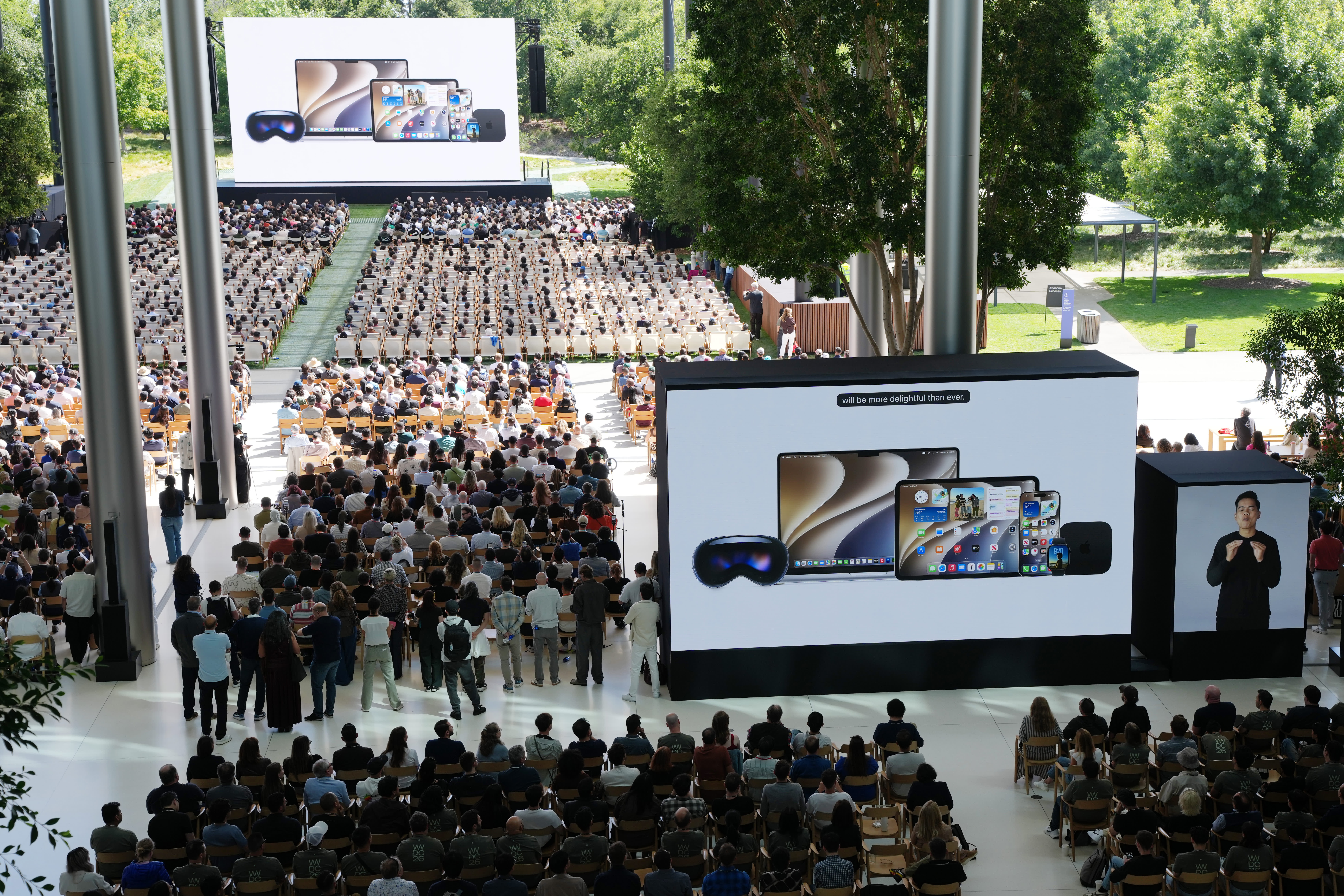
Apple unveiled Siri AI at WWDC on June 8, the rebuilt assistant it has owed customers for two years. Under it sits a customized 1.2-trillion-parameter Google Gemini model, licensed for roughly $1 billion a year after Apple tested Anthropic and OpenAI and picked Google. It landed in Tim Cook's final keynote as CEO, nine months from handing the company to hardware chief John Ternus. The firm that owns the device rented the model.
The mechanism is a three-tier router. Trivial requests stay on-device; mid-weight queries hit Apple's Private Cloud Compute; the heaviest reasoning leaves the building entirely, routed to the Gemini model on Google Cloud. Apple's contract bars Google from training on the traffic and keeps the queries stateless. Quietly, the iOS 27 beta carries an Extensions framework, toggled off, that would let a user swap Claude, ChatGPT, or Gemini in as Siri's backing model. Apple did not show it on stage.
The number that matters is reach: a frontier-lab model is now wired toward 2.5 billion active Apple devices, and Apple is paying rent to put it there. The battlefield moved. It is no longer about owning the glass in the hand. It is about winning the default-model pick behind it, and Google just won the largest socket on Earth. The Extensions toggle, if it ever flips on, is the only thing that turns that socket into a market.
Agentic commerce now has a universal payment rail, and the contest moves up a level. The same June 10, Mastercard launched Agent Pay for Machines; Stripe is wiring its shared payment tokens into both Visa and Mastercard schemes; Google's protocols sit underneath several of them. The plumbing is no longer the question. The fight is over which rail an agent reaches for by default, and the default is worth a percentage of every purchase an agent ever makes.
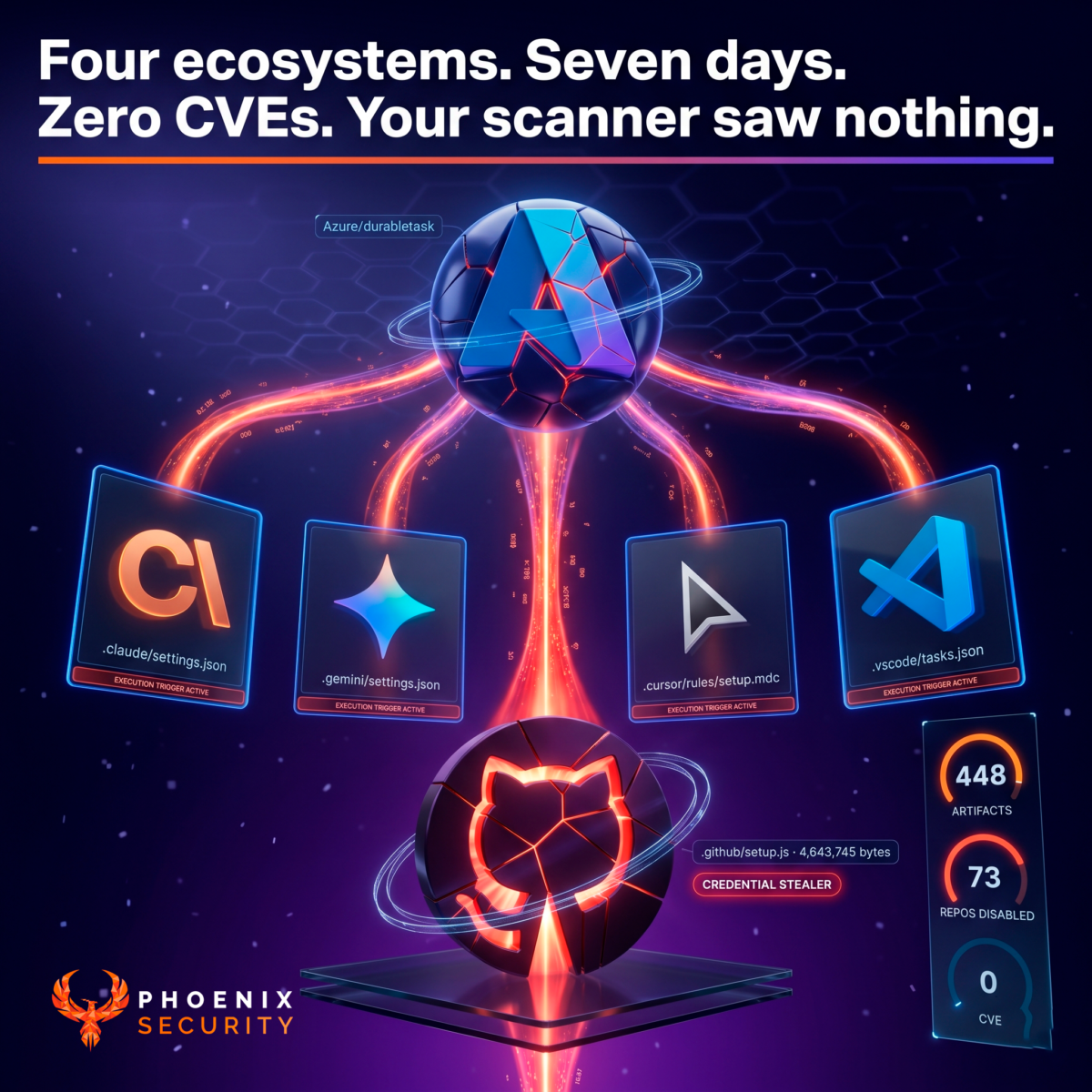
The **Miasma** worm that poisoned Red Hat's npm packages with valid provenance last issue did not stop at npm. On June 5th a 105-second automated sweep disabled 73 repositories across four Microsoft GitHub organizations and planted commit `5f456b8` into Azure/durabletask, carrying configuration files written to hijack Claude Code, Gemini CLI, Cursor, and VS Code. Two days later a Hades wave dropped 37 malicious wheel artifacts across 19 PyPI packages, taking the campaign to 448 poisoned artifacts across two ecosystems.
The mechanism is the part that should keep maintainers awake. Miasma propagates through a `binding.gyp` native-compilation hook and `.pth` startup hooks that run on install, not on import, so a developer is compromised the moment a poisoned dependency lands rather than the moment they call it. It abuses GitHub Actions trusted publishing to mint short-lived tokens and forge **SLSA provenance** attestations, which means the cryptographic signal built to prove a package is trustworthy was the cover the worm hid behind. Its credential sweep still includes a collection path for Anthropic API keys read from `~/.claude.json`.
The lineage accelerates each time it appears. Last issue it was a credential-stealer in one namespace with a dormant key-collection path; this issue it is a self-spreading worm that crosses package managers, disables vendor repositories in under two minutes, and writes itself into the config files of the coding agents developers now run unattended. The trust signals built to catch supply-chain attacks, provenance attestations and trusted publishing, are the exact surfaces it turned into delivery. The stack the frontier ships on is held together by the package managers, and the package managers are the soft tissue.
The reason it cannot be patched is structural. A large language model has no built-in way to separate trusted commands from untrusted data, because both arrive as the same stream of tokens; an instruction buried in a fetched web page, a code comment, or a calendar invite is read with the same authority as the operator's own prompt. Conventional software draws a hard line between code and input, and that line is what the agent runtime erases by design. OWASP's conclusion is that the defenses available, input filtering, output checks, human approval gates, are mitigations that lower the odds, not fixes that close the hole.
The timing is the indictment. The same week three labs filed for the public markets and Anthropic put its most powerful agent on sale, the standards body declared that the thing all of it runs on has a permanent architectural opening. An agent that can pay a merchant, edit a repository, and read your inbox is an agent whose instructions can be rewritten by anything it reads. The frontier is selling autonomy priced as a finished product, and the people who write the rulebook just said the foundation is load-bearing sand.
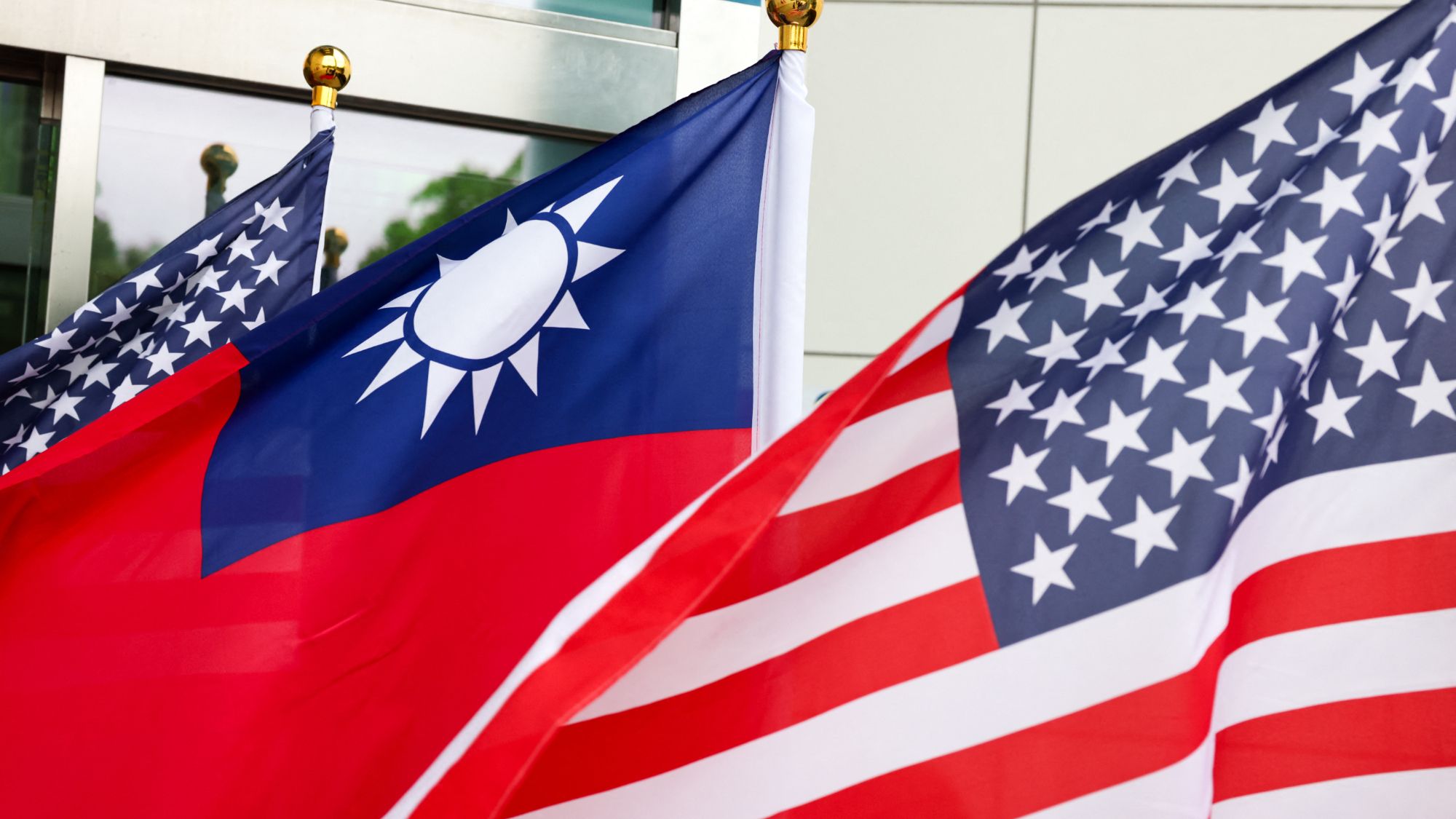
Taiwan is weighing a rule that would make unauthorized AI-chip exports to all of mainland China a criminal offense, an escalation past its current firm-specific blacklist, Taipei officials told reporters around June 10. The trigger was a Keelung customs case: three people arrested in May over roughly 50 servers carrying high-end Nvidia chips, falsely papered for Northeast Asia but routed toward Hong Kong and Macau. Note the word: weighing, not passed.
The case exposed the hole. Taiwan added Huawei and SMIC to its export-control list in June 2025, but the broader Chinese market sits outside that scope, so smuggling to it is not itself a crime. The Keelung defendants were charged with document forgery, the only local law that fit, not with breaking export controls. The proposal under study would restrict sales to all Chinese customers and let prosecutors charge the diversion itself, with the timing tied to ongoing US trade talks.
The diversion route was always the binding leak in the silicon-control regime, and a blacklist never sealed it. Washington restricts the chip, Taiwan licenses the named buyer, and the server still moves through a relabeled container to an unlisted shell. Criminalizing the route, not just the recipient, is the first control that bites the courier instead of the customer. Server assemblers like Foxconn now carry the compliance weight, because the leak they were tolerating is about to become a prison term.
Read the lead, not the demo. A stablecoin issuer fronting a humanoid round is treasury capital looking for somewhere physical to land, and Tether is explicit about why. Autonomous machines, its chief executive said, need "the ability to process information locally, make decisions, and transact without relying on centralized intermediaries." A robot that holds a wallet is a robot that pays for its own electricity, parts and compute. The "up to" matters: the full sum is tied to milestones, a ceiling rather than a wire.
The macro is loud. Robotics has pulled $55.8 billion year to date by Dealroom's count, nearly double last year's record, and the marginal dollar is now arriving from a new class of backer. When crypto treasuries start funding bodies instead of tokens, the question stops being whether physical AI gets built and becomes who underwrites the machines once they can pay their own way.
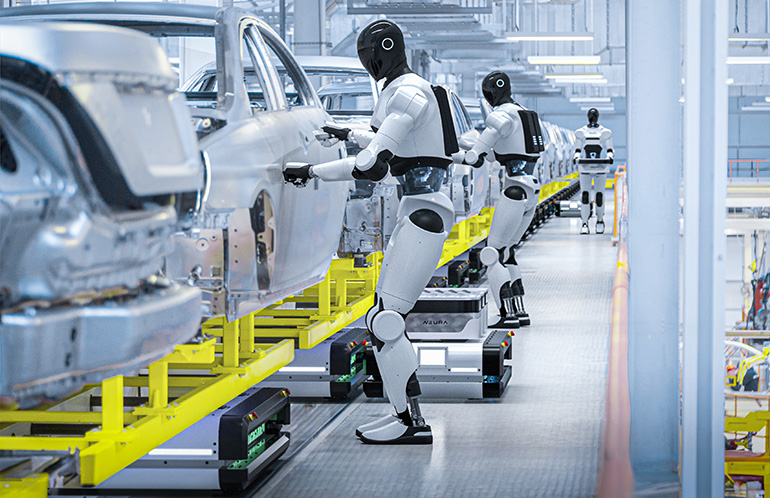
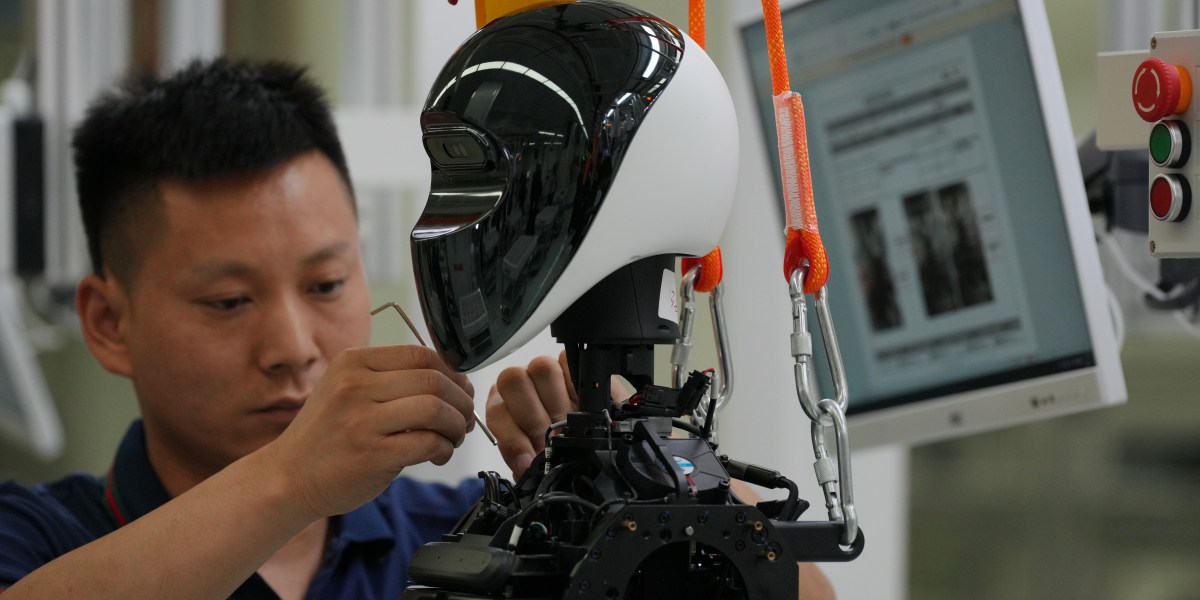
Read the constraint, not the demo. The embodiment wall this year is not the body, it is the purchase order. "Without the demand and without that scale from the market, these companies are not able to really go into mass production," Chibo Tang of Gobi Partners told Fortune, naming the loop directly: factories need volume to drop the price, and buyers wait for the price to drop before they place volume. Most units shipping today are performative rather than functional, demos in showrooms, not workers on a line, which is why a $30,000 sticker still reads as too high to a plant manager costing the same task in human labor.
The frontier moved while the capital chased the old one. Days after Tether anchored a $1.4 billion round into a European body, the lesson from the country that already mass-produces them is that supply was never the wall. A report from the Mercator Institute for China Studies found that even China's cheaper humanoids remain "far too expensive for widespread deployment." Whoever wins embodiment next will not be the firm that builds the most machines. It will be the one that gives a machine a job worth paying $30,000 to fill.